In industrial facilities, compressed air systems are used every day for assembly, repair, cleaning, spraying, fastening, and maintenance work. The hose connected to the tool may look simple, but when it fails, the result can affect more than productivity.
A damaged or poorly controlled recoil air hose can create air leakage, tool instability, tripping hazards, sudden whip movement, and unsafe workstation conditions. For factories, workshops, vehicle service centers, and industrial maintenance teams, hose reliability is part of workplace safety management.
A minor air leak may not stop a tool immediately, so workers often continue using the hose. Over time, the compressor works harder, tool output becomes unstable, and the hose condition keeps getting worse.
This creates hidden safety and energy problems. A weak air line can fail suddenly during use, especially if it has already been stretched, crushed, or bent repeatedly.
When a hose loses elasticity or develops weak spots, it may not recoil properly. Loose hose sections can remain on the floor, around workbenches, or near moving carts.
In busy industrial areas, this increases the risk of tripping, snagging, or accidental pulling against the connected tool.
A recoil hose should return toward its compact shape after use. This helps keep the hose closer to the workstation and reduces floor clutter.
For factories using multiple pneumatic tools, cleaner hose management can reduce worker movement obstacles and support safer daily operation.
If the hose does not return properly after repeated use, workers may need to manually coil it, push it aside, or leave it hanging loosely.
This adds unnecessary handling time and may create inconsistent workstation conditions between shifts. A hose that keeps better recoil performance helps maintain more predictable tool areas.
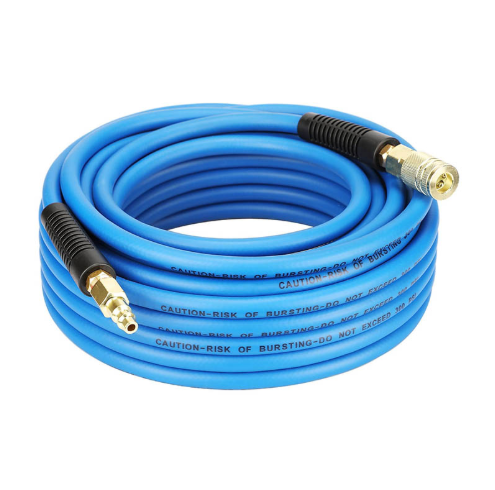
A polyurethane recoil air hose is often used in industrial settings because it can stay flexible while supporting repeated extension and recovery.
For buyers, flexibility alone is not enough. The hose should also resist abrasion, bending stress, and daily workshop movement. This helps reduce early cracking and leakage.
Industrial facilities may use air tools in different environments. Some areas are hot, some are dusty, and some require higher air pressure.
Before bulk purchasing, buyers should confirm working pressure, burst pressure, hose diameter, connector size, and operating temperature conditions. A mismatch can increase failure risk after installation.
Distributors, air tool brands, and industrial supply companies cannot risk inconsistent hose performance. If one shipment recoils smoothly and another leaks or cracks early, the customer will question the whole product range.
This is why many buyers look for recoil air hose manufacturers oem support when they need stable materials, consistent fittings, and reliable repeat supply.
Industrial buyers often need product information, pressure ratings, hose length, connector type, and handling instructions clearly shown.
Good labeling helps reduce wrong use after delivery and supports safer operation for downstream customers.
A sample should be tested beyond appearance. Buyers should stretch the hose repeatedly, check whether it returns smoothly, and observe whether it tangles, flattens, or loses shape.
This gives a better idea of how the hose will perform in real workstation conditions.
A hose should maintain stable air delivery when connected to actual tools. If air pressure drops or fluctuates, tool performance may suffer.
Facilities should test the hose with the tools most commonly used in production, repair, or maintenance work before confirming bulk procurement.
Industrial air hoses are often purchased as routine supplies, but poor selection can affect safety, energy use, and worker efficiency.
A reliable Recoil Air Hose helps keep work areas more organized, supports stable air delivery, and reduces the possibility of failures during operation.
We can support industrial buyers with hose length selection, polyurethane material discussion, connector matching, OEM requirements, and repeated order planning.
More hose solutions for air tools, repair stations, workshops, and factory supply can be reviewed on the JITONE hose website. When safety standards depend on everyday equipment behavior, the right hose becomes part of a safer and more controlled industrial workplace.