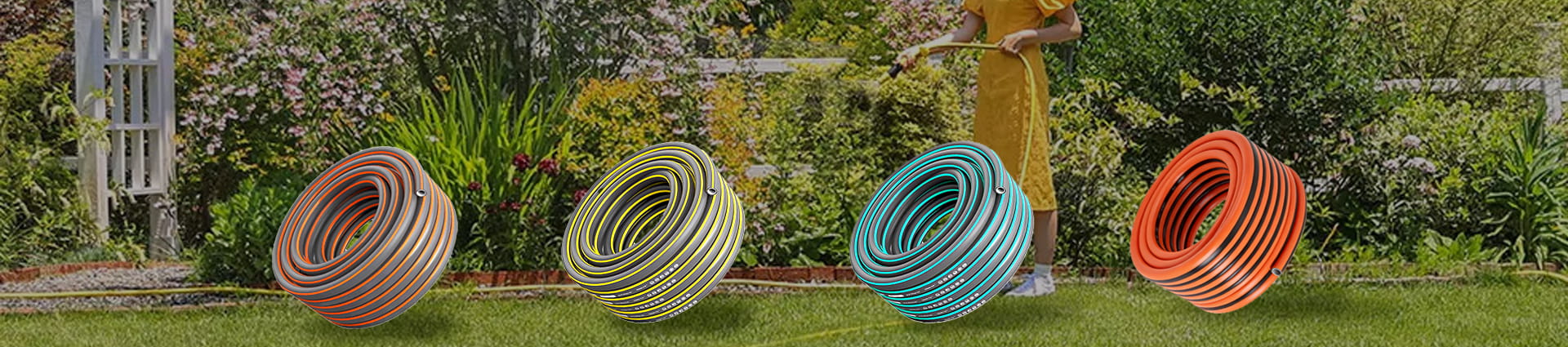
A soaker hose works by releasing water slowly along its length. Instead of spraying water into the air, it allows water to seep directly into the soil near plant roots. This makes it useful for garden beds, vegetable rows, hedges, flower borders, and areas where slow watering is preferred.
The main benefit is controlled ground-level watering. Less water is lost to wind drift and surface splash compared with overhead spraying. The soil receives moisture more gradually, which can help plants absorb water more evenly.
A soaker hose is made with tiny pores or openings along the hose wall. When water pressure enters the hose, water seeps through these openings and spreads into the surrounding soil.
The hose is usually laid on the ground or covered lightly with mulch. It is placed near the root zone, not far away from the plants. The water then moves down and sideways through the soil.
A soaker hose does not need a strong spray pattern. It needs steady low-pressure water distribution.
A normal garden hose carries water from one point to another. It usually needs a nozzle, sprinkler, or connector at the end to control water output.
A soaker hose releases water along the whole hose body. It is designed for slow irrigation rather than washing cars, rinsing patios, or filling buckets.
Our garden hose products support outdoor water delivery, cleaning, irrigation, and general household use. For irrigation projects, buyers often combine hoses, nozzles, connectors, reels, and adapters according to the actual watering layout.
A soaker hose is useful when plants are arranged in rows or beds. It performs well when the hose can be laid close to the plants and left in place during the growing season.
Typical use areas include vegetable gardens, raised beds, shrubs, trees, flower borders, and greenhouse planting rows. It is less suitable for watering large lawns because lawns usually require more even surface coverage over a wide area.
For large-area watering, a sprinkler system, spray nozzle, or irrigation layout may be more practical.
Soaker hoses usually work better with moderate or low water pressure. Excessive pressure may cause uneven watering, spraying from small pores, or faster wear.
If the water pressure is too high, a pressure regulator may be needed. If the hose run is too long, water may release more strongly near the inlet and more weakly near the far end.
A good layout may use shorter runs, separate zones, or connectors to balance water delivery.
Soil condition affects how water spreads. Sandy soil drains quickly and may need shorter but more frequent watering. Clay soil holds water longer, but it absorbs more slowly.
Mulch can help reduce evaporation and keep moisture near the plant roots. However, the hose should still be checked occasionally to make sure it is not clogged, crushed, or blocked by soil.
After installation, test the soil moisture in several places rather than assuming the entire bed is watered equally.
A soaker hose can clog when minerals, sediment, or dirt collect in the pores. Using a filter can help when the water source contains debris.
At the end of the season, drain the hose, allow it to dry, and store it away from sunlight and freezing conditions when possible. Avoid dragging it over sharp stones or bending it tightly.
For hose distributors, material flexibility, wall structure, connection quality, and packaging instructions all affect customer experience.
Accessories can improve irrigation convenience. Quick connectors make it easier to remove the hose. Tap adapters help fit different outdoor faucets. Spray nozzles with soaker or full-flow settings can support flexible watering tasks.
Our hose accessories include connectors, nozzles, tap adapters, brass fittings, and hose connector sets that can be matched with outdoor watering products.
A complete garden watering set is often easier for end users than a loose hose without compatible fittings.
A soaker hose works by slowly releasing water through small pores along the hose body. It waters the soil near plant roots instead of spraying water into the air.
It is best for garden beds, shrubs, vegetable rows, and slow irrigation layouts where controlled root-zone watering is needed.
Send us your hose size, length, working pressure, connector requirement, nozzle type, color, packaging style, and order quantity. Our team can recommend suitable garden hose and accessory options for irrigation and outdoor watering markets.