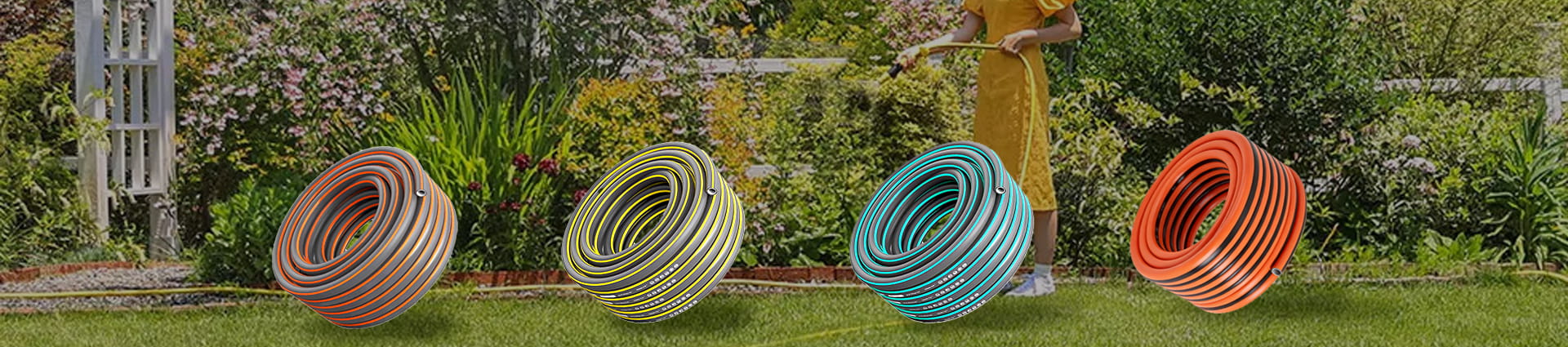
PVC hose is a flexible tube made primarily from polyvinyl chloride compounds. Depending on its formulation and construction, it can transfer water, air, gas, cleaning liquids, spray solutions, or other compatible media. PVC hoses are widely used because their diameter, color, flexibility, reinforcement, pressure rating, printing, and packaging can be adapted to different applications.
“PVC hose” describes the material family, not one universal product. The intended medium and operating conditions still determine which PVC hose is suitable.
Rigid PVC is used in pipes, profiles, and building products. A flexible hose requires a formulation that gives the material the bending and handling characteristics needed for its application.
The compound may be adjusted according to:
Required softness
Temperature range
Transparency or color
Abrasion resistance
Weather exposure
Aging performance
Odor requirements
Contact medium
Printing adhesion
Layer-to-layer bonding
Two hoses made from PVC can behave differently because their formulations and structures are not identical.
A single extruded layer provides a simple and lightweight structure. It may suit low-pressure or general transfer applications where reinforcement is unnecessary.
Different layers can be used to separate the functions of the inner tube and outer cover. The inner layer contacts the medium, while the outer layer protects against handling and environmental exposure.
Polyester yarn or another reinforcement is placed between PVC layers. The braid helps limit expansion and increases pressure resistance.
A finished assembly may include connectors, nozzles, regulators, adaptors, reels, or crimped fittings. The performance of the complete assembly depends on both the hose and connections.
PVC Garden Hoses deliver water for irrigation, landscaping, vehicle washing, and outdoor cleaning. Air hoses connect compatible pneumatic tools and compressed-air systems. Gas Hoses transfer an approved gas between suitable system components. High-pressure spray hoses support agricultural spraying, cleaning, and other pressurized fluid applications.
PVC is also used in Shower Hoses, washing-machine inlet and drain hoses, and other household or light-commercial products.
A hose should never be selected only because its diameter fits the connection.
What medium will pass through the hose?
What are the normal and maximum pressures?
What temperature will the hose and medium reach?
Will the hose be exposed to sunlight, abrasion, chemicals, or oil?
Which fittings and market standards apply?
These questions determine whether the product needs a simple wall, multi-layer body, reinforcement braid, specialized cover, or another construction.
Working pressure is the pressure under which a hose is intended to operate according to its specification. Burst pressure is the pressure at which a new test sample fails under defined laboratory conditions.
Burst pressure is not an operating target. A hose should not be used continuously near its burst rating.
Pressure performance can also change with temperature, aging, bending, fittings, and repeated pressure cycles. Buyers should request test conditions together with the numerical result.
We are a PVC hose wholesale supplier serving brands, wholesalers, distributors, and project buyers. Our product range includes garden hoses, gas hoses, high-pressure hoses, air hoses, shower hoses, washing-machine hoses, and compatible Accessories.
Our production system covers material preparation, extrusion, braiding, winding, printing, assembly, inspection, and packaging. Diameter, length, pressure level, color, reinforcement pattern, surface marking, connector configuration, and retail packaging can be coordinated for repeat supply.
An in-house laboratory performs pressure, burst, aging, and material testing to help verify that the approved hose structure remains consistent during production.
A PVC hose is a flexible transfer product whose function is determined by its formulation, layers, reinforcement, dimensions, and fittings. Select it by application and verified specification—not by material name alone.