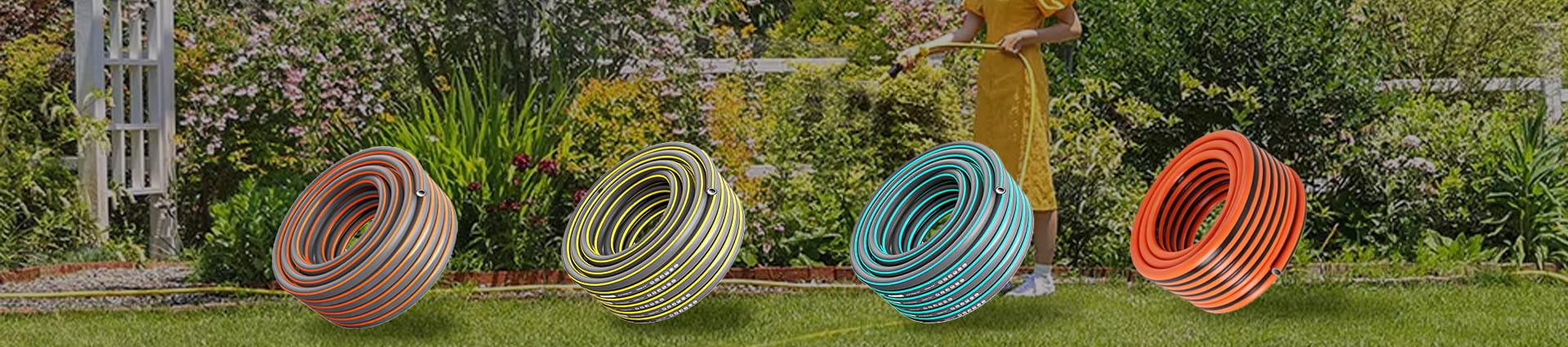
Garden Hoses and poly tubing are designed for different watering applications. Garden hoses are better for portable watering tasks, while poly tubing is usually preferred for fixed irrigation systems that require controlled water delivery.
At first glance, garden hoses and poly tubing appear to serve similar purposes because both transport water.
However, they are designed around different usage methods.
A garden hose is usually a flexible product that users connect, move, and store repeatedly.
Poly tubing is commonly used as part of a permanent or semi-permanent irrigation system where the tubing remains installed for a longer period.
For professional buyers, choosing between these products affects:
Installation method
Maintenance requirements
System design
Product positioning
Customer satisfaction
A landscaping supplier, irrigation distributor, or garden product brand needs to understand not only the product appearance but also how the product will be used after purchase.
A garden hose is designed for flexible water delivery.
Its biggest advantage is mobility.
Users can move the hose between different locations, connect different Accessories, and store it after use.
Common applications include:
Home gardening
Lawn watering
Outdoor cleaning
Vehicle washing
General outdoor water supply
Because users frequently handle garden hoses, product design focuses heavily on:
Flexibility
Weight
Kink resistance
Connection compatibility
Storage convenience
For retail markets, user experience is often one of the most important purchasing factors.
A hose that is difficult to move or frequently twists during use may create customer complaints even if the basic water delivery function works.
Poly tubing is commonly used in irrigation and water distribution systems.
Unlike a portable garden hose, poly tubing is usually installed as part of a planned watering network.
Typical applications include:
Drip irrigation
Greenhouses
Landscaping systems
Agricultural watering
Underground irrigation layouts
The priority is usually not frequent movement.
Instead, buyers focus on:
Long-term installation
Water distribution efficiency
System reliability
Compatibility with fittings
For irrigation professionals, poly tubing is often selected because it can create organized watering systems with predictable water delivery.
The biggest difference is the intended application.
A garden hose is designed for direct user operation.
The user controls:
Location
Water direction
Usage time
Poly tubing is designed for system integration.
The tubing becomes part of a larger irrigation structure.
This difference affects:
Material requirements
Connection methods
Pressure design
Installation process
The answer depends on the gardening style.
For homeowners who need occasional watering, a garden hose is usually more practical.
Advantages include:
Easy connection
Simple storage
Flexible movement
Compatibility with spray nozzles
For homeowners with automated irrigation systems, poly tubing may provide better long-term convenience.
For example:
A vegetable garden with fixed planting areas may benefit from a planned irrigation network.
A small lawn requiring occasional watering may only need a flexible hose.
Commercial landscaping projects often require more systematic solutions.
Large gardens, parks, and landscape projects may require:
Consistent water distribution
Reduced manual operation
Long installation periods
In these cases, poly tubing can provide advantages because the system can be designed around specific watering zones.
However, garden hoses still have value for:
Maintenance work
Temporary watering
Cleaning operations
Professional users may actually need both products depending on the project.
Both products rely on material engineering.
For garden hoses, manufacturers focus on:
Flexibility
Pressure resistance
Reinforcement
Outdoor durability
For poly tubing, manufacturers focus on:
Dimensional stability
Long-term outdoor exposure
Connection reliability
Pressure consistency
The raw material alone does not determine quality.
Production technology also matters.
For garden hose production, several factors affect final performance.
The formulation determines:
Softness
Strength
Weather resistance
Aging performance
During extrusion, manufacturers control:
Inner diameter
Wall thickness
Surface quality
Inconsistent dimensions can affect:
Water flow
Fitting compatibility
Pressure performance
For reinforced garden hoses, the reinforcement layer improves resistance against:
Expansion
Pressure changes
Repeated bending
Wholesale buyers should consider their target customers.
Garden hoses may be more suitable because they are easier for consumers to understand and use.
Important selling points include:
Lightweight handling
Flexible design
Multiple lengths
Attractive packaging
Poly tubing may better match customers who install irrigation systems.
Important factors include:
System compatibility
Long-term reliability
Fitting options
OEM buyers should consider whether their market requires:
Custom specifications
Different diameters
Color options
Packaging design
An experienced hose manufacturer does not simply produce one standard product.
Different applications require different solutions.
Manufacturers evaluate:
Material selection
Wall thickness
Reinforcement structure
Pressure requirements
Outdoor conditions
This application-based approach helps buyers avoid selecting a product that does not match the actual market demand.
Garden hoses are better for portable watering and flexible outdoor use, while poly tubing is better for fixed irrigation systems requiring planned water distribution.
The correct choice depends on whether the product is designed for manual operation or integrated watering systems.
For garden product distributors and irrigation suppliers, selecting the correct hose structure helps improve customer satisfaction and reduce product problems.