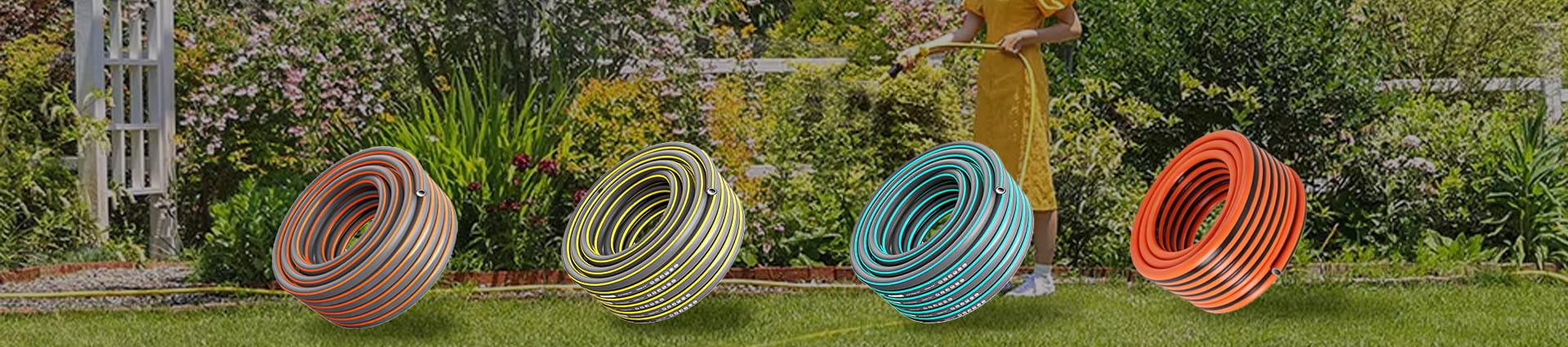
The right Garden Hose size depends on water flow requirements, hose length, water pressure, and application purpose. Most residential users choose 1/2 inch, 5/8 inch, or 3/4 inch hoses depending on the required water volume.
Many buyers choose hose size based only on appearance or price.
However, hose diameter directly affects water flow performance.
For professional buyers, size selection influences:
Product application
Customer expectations
Market positioning
Product replacement rates
A hose designed for light gardening does not require the same diameter as one used for commercial landscaping.
Choosing the wrong size can create problems:
Insufficient water flow
Excessive pressure loss
Difficult handling
Customer dissatisfaction
The internal diameter determines how much water can pass through the hose.
A larger diameter generally allows higher water volume.
However, larger is not always better.
A larger hose may also:
Increase weight
Require stronger fittings
Cost more
Become harder to store
Therefore, the correct size depends on the application.
Common garden hose sizes include:
1/2 inch
5/8 inch
3/4 inch
1 inch for specialized applications
Each size serves different needs.
A 1/2 inch hose is commonly used for light applications.
Suitable uses include:
Small gardens
Plant watering
Short-distance watering
Advantages:
Lightweight
Easy handling
Convenient storage
It is often suitable for residential users who do not require high water volume.
A 5/8 inch hose is one of the most common choices for general gardening.
It provides a balance between:
Water flow
Weight
Flexibility
This makes it suitable for:
Medium-sized gardens
Lawn watering
Outdoor cleaning
For many retail markets, 5/8 inch represents a practical middle option.
A 3/4 inch hose is designed for applications requiring higher water flow.
It is often used for:
Large lawns
Landscaping
Commercial watering
The increased diameter allows greater water volume but usually results in:
Higher weight
Larger storage requirements
Hose length also influences performance.
A longer hose creates more resistance to water flow.
For example:
A short hose may perform well with a smaller diameter.
A very long hose may require a larger diameter to maintain sufficient water delivery.
Professional buyers should consider both:
Length
Diameter
rather than evaluating them separately.
Water pressure affects the final performance of the hose.
A larger diameter hose does not automatically solve every water delivery problem.
The complete system includes:
Water source
Pressure level
Hose diameter
Length
Nozzle restriction
Manufacturers and distributors should consider the actual application instead of recommending products only by size.
For private label and wholesale buyers, size selection should match the target market.
Important factors include:
Common regional sizes
Consumer expectations
Retail channel requirements
Packaging limitations
Accessories compatibility
For example, a hardware retailer may require standard sizes compatible with common fittings and nozzles.
Size consistency is critical in hose production.
Manufacturers need to control:
Inner diameter
Outer diameter
Wall thickness
Roundness
These factors influence:
Water flow
Fitting connection
Pressure performance
During extrusion production, inaccurate dimensions can create problems when customers connect hoses with standard accessories.
Most residential users choose 5/8 inch garden hoses because they provide a good balance between water flow and handling. However, the best size depends on application, hose length, water pressure, and intended usage.
For distributors and brands, offering different hose sizes helps serve different customer groups.