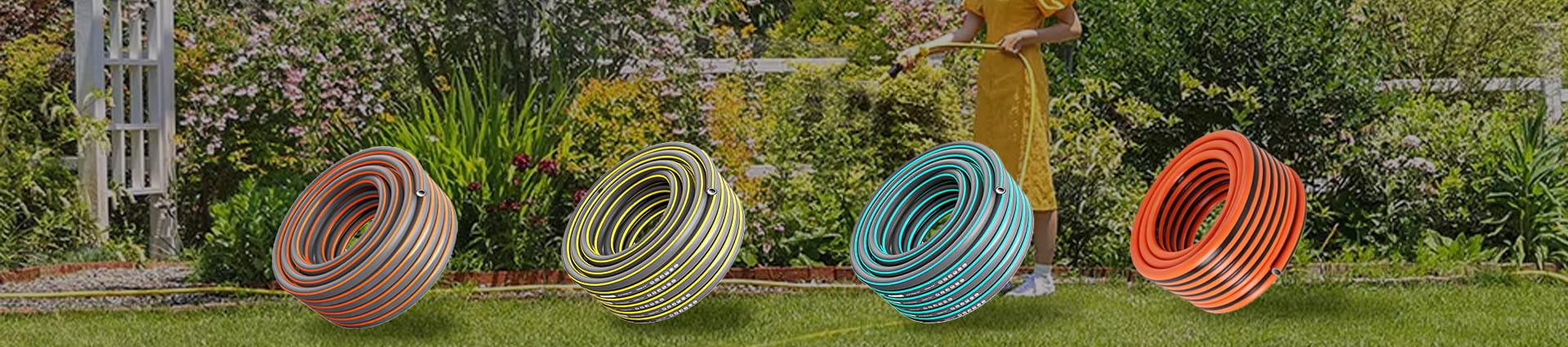
Choosing the right Garden Hose requires evaluating material, diameter, length, pressure requirements, climate conditions, and application needs. The best hose is the one that matches the user's environment rather than simply the lowest-priced option.
A garden hose may appear to be a simple product, but its performance depends on many factors.
For professional buyers, selecting a hose affects:
Customer satisfaction
Product returns
Market positioning
Brand reputation
A hose used in a cold climate, a commercial garden, and a small backyard may require completely different designs.
This is why experienced suppliers evaluate the complete application before recommending a product.
Material selection determines many performance characteristics.
Common options include:
PVC
Rubber
TPU-based materials
Each has different advantages.
PVC hoses are widely used because they provide:
Cost efficiency
Lightweight handling
Flexible product design
They are common in retail gardening markets.
Rubber hoses are often selected for:
Heavy-duty applications
Frequent use
Better abrasion resistance
They may provide longer service life but usually involve higher material costs.
Some hoses include reinforcement layers to improve:
Pressure resistance
Shape stability
Durability
The reinforcement structure is especially important for buyers targeting professional users.
Diameter should match the required water flow.
Smaller diameters are suitable for light applications.
Larger diameters support higher water volume.
However, buyers should also consider:
Weight
Storage
Customer handling
Price positioning
Environmental conditions influence hose performance.
Important factors include:
Temperature changes
UV exposure
Outdoor storage
Seasonal use
For example, a hose sold in colder regions requires different flexibility performance from one used in warm climates.
Material formulation and testing become important factors.
Two hoses with identical specifications can perform differently because production quality varies.
Important manufacturing controls include:
Consistent formulation ensures stable performance.
Accurate extrusion affects:
Wall thickness
Diameter
Surface quality
Testing may include:
Pressure testing
Leakage testing
Aging evaluation
These processes help maintain quality during mass production.
A professional supplier should provide:
Stable production capability
Consistent quality
OEM customization
Technical support
For international buyers, supplier reliability is critical because repeated orders require the same performance standards.
OEM buyers may customize:
Color
Length
Diameter
Packaging
Branding
Product structure
Customization allows brands to create products positioned for different customer groups.
The right garden hose depends on material, size, application, environment, and expected service life. Buyers should evaluate the complete product structure instead of selecting only by price.
For distributors, retailers, and private label brands, choosing the right hose structure helps create competitive products for different markets.