Cutting PVC pipe correctly helps create a clean joint, reduce leaks, and make installation easier. A crooked or rough cut can prevent the pipe from fitting fully into the connector, which may weaken the joint or create sealing problems.
The best cutting method depends on pipe diameter, wall thickness, tool availability, and whether the pipe is loose or already installed.
For small PVC pipe, a ratcheting PVC cutter is often the easiest tool. It gives a clean cut and is convenient for plumbing and irrigation work.
For larger pipe, a fine-tooth saw or pipe saw may be better. A miter box can help keep the cut square. For thick pipe, a power tool may be used by trained workers, but care is needed to prevent melting, cracking, or rough edges.
Do not use a dull tool. A bad blade can crush or chip the pipe.
Before cutting, measure twice and mark the pipe with a pencil or marker. Wrap a piece of paper or tape around the pipe to create a straight guide line if needed.
A straight line helps keep the cut square. This is especially useful when the pipe must insert into a fitting.
If the pipe will be joined with solvent cement, a clean square end improves contact between the pipe and fitting.
PVC pipe should be supported so it does not move, vibrate, or crack during cutting. If the pipe is loose, place it on a stable surface. If it is installed, support the nearby section and avoid putting stress on existing joints.
For larger pipe, do not let the cut-off piece drop suddenly because it may crack the edge or pull on the remaining pipe.
Stability is part of a clean cut.
After cutting, remove burrs from the inside and outside edges. Burrs can scrape away cement, catch debris, reduce flow, or prevent full fitting insertion.
Use a deburring tool, utility knife, sandpaper, or file carefully. The goal is to smooth the edge without changing the pipe size too much.
After deburring, wipe away dust and plastic shavings before assembly.
Before applying PVC cement, insert the pipe into the fitting without glue to check length and fit. The pipe should enter deeply enough and sit straight.
Dry fitting helps confirm that the cut is accurate. Once cement is applied, adjustment time is very short.
If the cut is too short, the joint may not have enough bonding area. If it is too long, the assembly may not align.
PVC hose is cut differently from rigid pipe. A flexible hose should be cut with a sharp blade, hose cutter, or proper cutting tool that keeps the end clean and round.
A crushed or angled hose end may not seal well with connectors or clamps. For reinforced hose, cutting must also control the fiber or braided layer so it does not fray excessively.
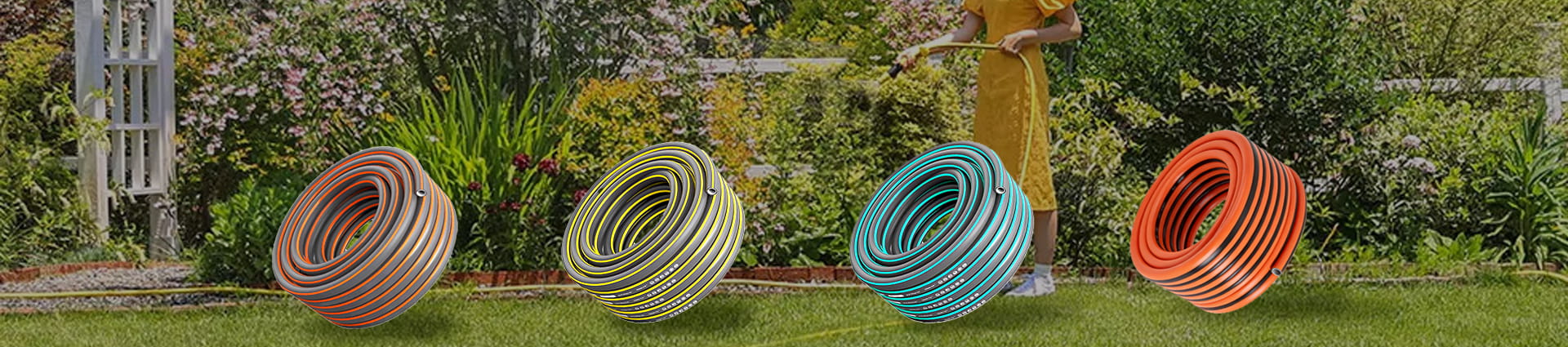
Our garden hose kit products include reinforced PVC hose options that are designed for outdoor watering and connector use. For hose buyers, clean cutting and connector matching are important for leak reduction.
In factory production, hose cutting is controlled by length, tolerance, blade condition, and packaging requirement. In field use, cutting is usually manual and less precise.
For bulk orders, buyers can request specific hose lengths, pre-assembled connectors, retail kits, or roll packaging. This reduces the need for end users to cut hoses themselves.
We support customization for PVC hose size, length, color, connector type, and packaging according to market needs.
Common PVC cutting mistakes include angled cuts, crushed ends, burrs, wrong length, cracked pipe, rough hose ends, and cutting before confirming fitting depth.
For hoses, another issue is using household scissors on reinforced material. This may create a jagged edge and make connector installation harder.
The cleaner the cut, the easier the connection.
To cut PVC pipe, mark the pipe accurately, use the correct cutter or fine-tooth saw, support the pipe, cut squarely, deburr the edge, clean the dust, and dry-fit before assembly.
For PVC hose, use a sharp cutter and keep the end round and clean for better connector performance.
Send us your hose type, required length, diameter, reinforcement structure, connector need, packaging style, and order quantity. We can recommend cut-to-length PVC hose or hose kit solutions for garden, washing, air, or general supply channels.
Previous: Is There A Such Thing As Clear PVC Pipe?
Next: How To Measure PVC Pipe?