PVC and vinyl hose are often treated as two different materials, but vinyl hose commonly refers to flexible PVC hose because PVC stands for polyvinyl chloride. The real comparison should focus on formulation, structure, pressure, flexibility and application.
In most hose discussions, yes.
PVC means polyvinyl chloride, which is a vinyl polymer. The term “vinyl hose” is often used commercially to describe flexible PVC tubing or hose.
This creates a common purchasing problem: buyers may compare “PVC” and “vinyl” as though they were completely separate materials.
In practice, the more useful questions are:
What PVC formulation is used?
Is the hose reinforced?
What is the wall thickness?
What is the working pressure?
How flexible is it?
What temperature range is required?
What fittings are installed?
Material name alone does not define the finished hose.
A hose can have different:
Plasticizer systems
Wall thickness
Reinforcement
Layer structure
Surface formulation
Inner diameter
Outer diameter
Fittings
For example, one flexible PVC hose may be designed for simple household watering while another reinforced PVC hose is designed for more frequent movement and higher pressure.
Instead of comparing only “PVC vs vinyl,” compare the finished hose specification.
| Factor | What Buyers Should Compare |
|---|---|
| Material | PVC formulation |
| Structure | Single-layer or reinforced |
| Diameter | ID and OD |
| Pressure | Working and burst rating |
| Flexibility | Bend and handling behavior |
| Temperature | Minimum and maximum |
| Outdoor Use | UV/weather resistance |
| Fittings | Thread, connector and washer |
| Customization | Color, logo and packaging |
This gives a much more useful purchasing comparison.
Yes, when the formulation and structure match the application.
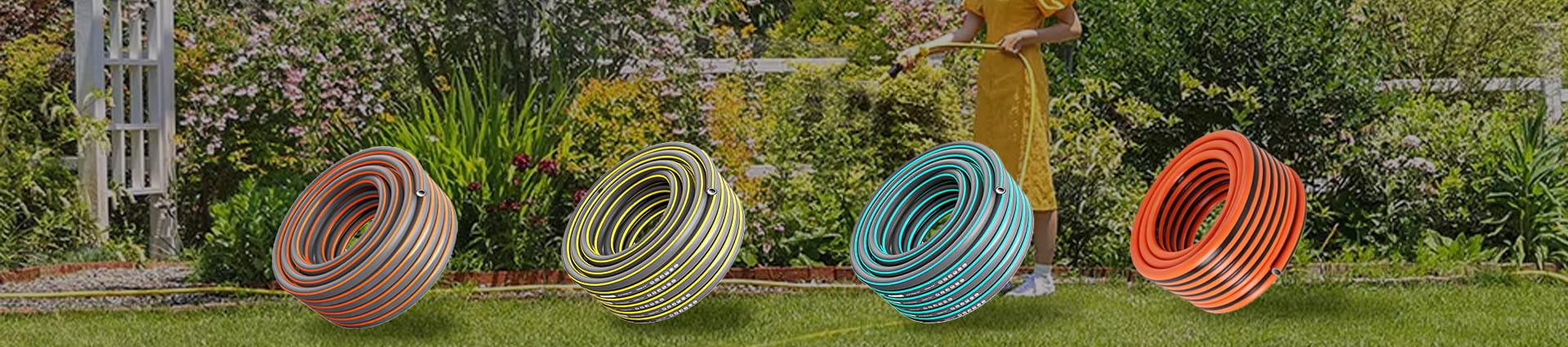
Our Durable Reinforced PVC Lightweight Garden Hose Pipe is available with PVC or reinforced PVC construction, 1/2, 5/8 and 3/4-inch diameters, customized lengths and several color options.
It is positioned for applications such as home gardening, lawn care, outdoor cleaning and light commercial use.
For a garden hose, lightweight handling and practical flexibility can be more valuable than simply selecting the thickest possible material.
Reinforcement can improve performance where the hose experiences greater pressure or handling.
A reinforced structure can help:
Reduce expansion
Improve pressure resistance
Maintain shape
Improve handling
Increase resistance to repeated movement
However, reinforcement also adds material and may affect weight and flexibility.
The best structure is therefore the one that matches the application.
This comparison is often misleading because many “vinyl hoses” are themselves flexible PVC hoses.
Flexibility depends on the formulation and construction.
A soft PVC hose can be highly flexible, while a reinforced PVC hose can be stiffer but more pressure-resistant.
The correct question is not simply:
“Is vinyl more flexible?”
It is:
“Which hose construction provides the flexibility and pressure performance required for this application?”
For general water delivery, PVC can be a practical material because it can combine flexibility, low weight and cost control.
The application should still determine the structure.
| Water Application | Useful PVC Characteristics |
|---|---|
| Home watering | Lightweight and flexible |
| Lawn care | Length and kink resistance |
| Outdoor cleaning | Handling and fitting stability |
| Irrigation | Flow and pressure |
| Light commercial use | Reinforcement and durability |
| Retail hose kits | Color and packaging customization |
For more demanding pressure applications, a dedicated high-pressure construction should be considered.
The hose should be selected according to pressure, temperature and pneumatic equipment requirements.
Our High Pressure Lightweight Recoil Air Hose uses PVC or hybrid material and is available with 5–13 mm inner diameters, 10–100 m lengths and working pressure options of 8–30 bar.
This illustrates why application-specific specifications matter more than calling a hose simply “PVC” or “vinyl.”
A water hose should not automatically be used for compressed air just because both products use PVC.
Rubber and flexible PVC can serve different market positions.
Rubber can offer advantages in demanding handling and certain temperature conditions, while PVC can provide lower weight, easier customization and cost control.
For retail buyers, the lighter PVC option may be more attractive.
For heavy industrial handling, another material or a reinforced construction may be more appropriate.
For OEM production, material selection is only the beginning.
We evaluate:
Application
Medium
Pressure
Temperature
Diameter
Wall thickness
Reinforcement
Fittings
Required flexibility
Production quantity
The structure can then be adjusted through extrusion, reinforcement and finishing processes.
This application-based approach is more useful than choosing a material name first and trying to force it into every application.
Yes.
For private-label and wholesale programs, customization can include:
Diameter
Length
Color
Reinforcement
Printing
Connector
Packaging
Logo
Our Durable Reinforced PVC Lightweight Garden Hose Kit is one example of a configurable product, with customized hose length, color, packaging and accessory combinations available.
For most purchasing decisions, the material name should be the starting point, not the final answer.
Choose based on:
Application → Medium → Pressure → Temperature → Structure → Fittings → Cost
This sequence helps prevent a common sourcing mistake: choosing a hose because the material sounds suitable without checking whether the finished construction can handle the actual working conditions.
For an OEM or wholesale project, provide the application, medium, required diameter, length, working pressure, temperature, flexibility requirement, fittings and estimated quantity.
Our team can recommend a suitable PVC or reinforced PVC construction and coordinate the hose, fittings and packaging as one product specification.
For samples, private-label development or bulk purchasing, submit your requirements through the Request A Quote page.