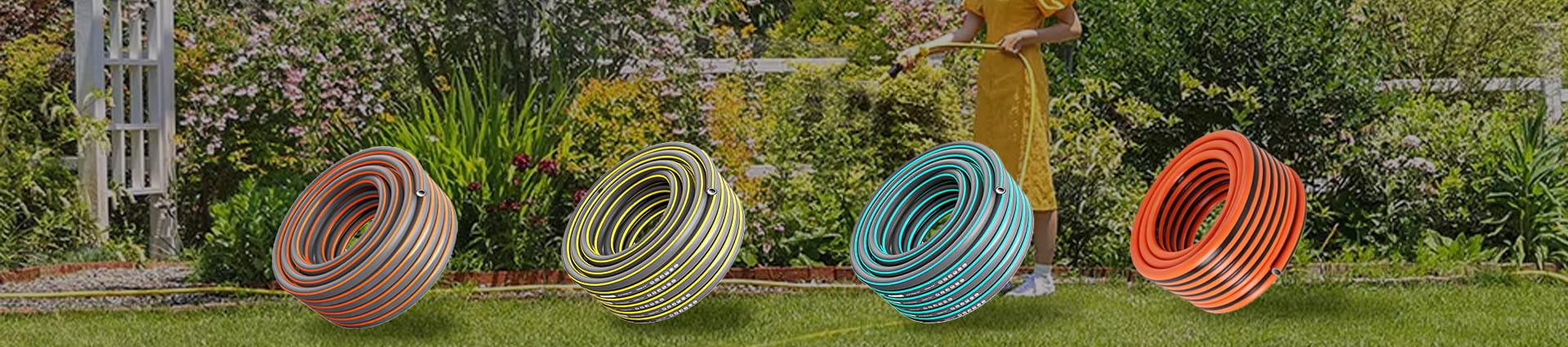
High Pressure Hoses transfer water, air, oil, agricultural solutions, or compatible chemicals in systems where an ordinary flexible tube cannot provide adequate pressure resistance. Their performance depends on the complete construction—not only the visible outer cover.
Buyers comparing high-pressure hose products should understand the inner tube, reinforcement, cover, fittings, working pressure, burst pressure, bend radius, and operating environment. These factors determine whether a hose can work reliably in pressure washers, spraying equipment, industrial machinery, automotive service, and other demanding systems.
A high pressure hose is a flexible, reinforced conduit engineered to contain pressurized media. Compared with a basic low-pressure hose, it normally has stronger reinforcement and a construction designed to control expansion under load.
A typical hose may include:
Inner tube: Carries the medium and must provide appropriate chemical compatibility.
Reinforcement layer: Helps the hose withstand internal pressure.
Outer cover: Protects against abrasion, weather, dirt, and handling damage.
End connections: Join the hose to pumps, valves, tools, or machinery.
The exact material and structure vary according to the application. A spraying hose and a compressed-air hose may both operate under pressure, but that does not mean they are interchangeable.
Working pressure is the maximum pressure intended for normal operation under specified conditions. Burst pressure is a laboratory performance value indicating the pressure at which a new hose may fail during a controlled test.
A burst rating must not be treated as the allowable operating pressure. Real installations experience temperature changes, pulsation, bending, abrasion, connector stress, and gradual material aging. Buyers should select the hose according to its rated working pressure and the requirements of the complete system.
Pressure spikes also matter. Pumps and fast-closing valves can briefly generate pressures above the normal gauge reading. Where pulsation or surge is expected, the specification should be reviewed by a qualified system engineer.
High-pressure hoses may be used in:
Agricultural spraying and pest-control equipment
Pressure washing and industrial cleaning
Pneumatic tools and compressed-air systems
Manufacturing machinery
Construction and maintenance equipment
Automotive workshops
Compatible chemical-transfer systems
Mobile and stationary fluid-transfer equipment
Our application overview explains how different hose categories support agriculture, cleaning, industrial systems, and commercial installations.
Material compatibility is just as important as pressure capacity. The inner tube must resist the transferred medium, while the outer cover must cope with external conditions.
For example, outdoor use may require resistance to sunlight, weather, and abrasion. Agricultural spraying may require a hose formulation compatible with the intended solution. Workshop use can expose a hose to oils, rough flooring, heat sources, and repeated dragging.
Temperature can change both flexibility and pressure performance. Buyers should always evaluate pressure, temperature, medium, and environment together.
A useful procurement specification should cover:
| Specification | Why It Matters |
|---|---|
| Working pressure | Defines the normal operating limit |
| Inner diameter | Influences flow rate and pressure drop |
| Hose length | Affects routing, handling, and flow |
| Transferred medium | Determines material compatibility |
| Temperature range | Influences flexibility and service performance |
| Reinforcement | Supports pressure resistance |
| Fitting standard | Ensures equipment compatibility |
| Packaging and marking | Supports distribution and identification |
Samples should be evaluated under conditions that represent the final application. Buyers can also request inspection documentation and define acceptance criteria before placing a bulk order.
We specialize in manufacturing PVC hose solutions and produce a range of flexible high pressure hoses as well as agricultural spray and recoil air hose products. This allows the company description to remain directly connected to the technical subject: different applications require different structures, sizes, reinforcement designs, and fittings.
As a high pressure hose wholesale supplier, we work with importers, wholesalers, brand owners, and industrial distributors. OEM and ODM programs can cover diameter, pressure rating, color, surface printing, reinforcement structure, connector selection, and packaging design.
Production stages are managed through extrusion, reinforcement, winding, finishing, inspection, and packing. Buyers can review technical requirements and approve samples before mass production.
Store unused hoses away from direct sunlight, extreme heat, ozone sources, chemicals, and sharp objects. Avoid stacking heavy materials on coiled hose.
During service, inspect the hose for:
Abrasion or cuts
Bulging or blistering
Permanent flattening
Hardened or cracked cover material
Loose or corroded fittings
Leakage near the coupling
Exposed reinforcement
Replace questionable assemblies rather than attempting temporary repairs not approved by the manufacturer.
Tell us the application, pressure, temperature, medium, diameter, connector type, and target market. Submit your requirements for a high-pressure hose recommendation and wholesale supply discussion.