Comparing a High Pressure Hose vs standard hose requires more than checking wall thickness. High-pressure hoses are engineered to contain greater internal force, while a standard hose may be intended for routine water delivery, light cleaning, irrigation, or another lower-demand application.
Using a standard hose in a high-pressure system can create a serious failure risk. At the same time, specifying the heaviest possible hose for every job may increase cost, weight, and handling difficulty without improving the overall system.
A high-pressure hose generally differs in five areas:
Reinforcement strength
Rated working pressure
Resistance to expansion
Fitting and assembly requirements
Inspection and safety controls
Standard hoses can still be well-made products. “Standard” simply describes a different operating purpose; it does not necessarily mean poor quality.
Pressure acts against the complete inner surface of the hose. As pressure rises, the wall and reinforcement must control radial expansion and longitudinal force.
The hose must also remain flexible enough for routing and equipment movement. Good design balances pressure resistance, flexibility, weight, abrasion protection, and flow performance rather than maximizing one characteristic in isolation.
A standard garden or water hose may be adequate for:
General garden watering
Routine outdoor rinsing
Non-pressurized or moderately pressurized water transfer
Household cleaning within the hose rating
Light commercial tasks with controlled operating conditions
Buyers should still confirm the stated working pressure, temperature range, material, and connector compatibility.
Select an appropriately rated high-pressure assembly when the application involves a pressure washer, agricultural sprayer, compressed-air system, industrial machine, or another system operating beyond the standard hose rating.
A chemical-resistant agricultural spray hose illustrates why application-specific selection matters: pressure resistance must work together with flexibility, abrasion behavior, environmental exposure, and compatibility with the intended spraying medium.
Confirm the machine’s maximum pressure and temperature, then select the hose and fittings as one rated assembly. Consider abrasion protection and routing around vehicles or machinery.
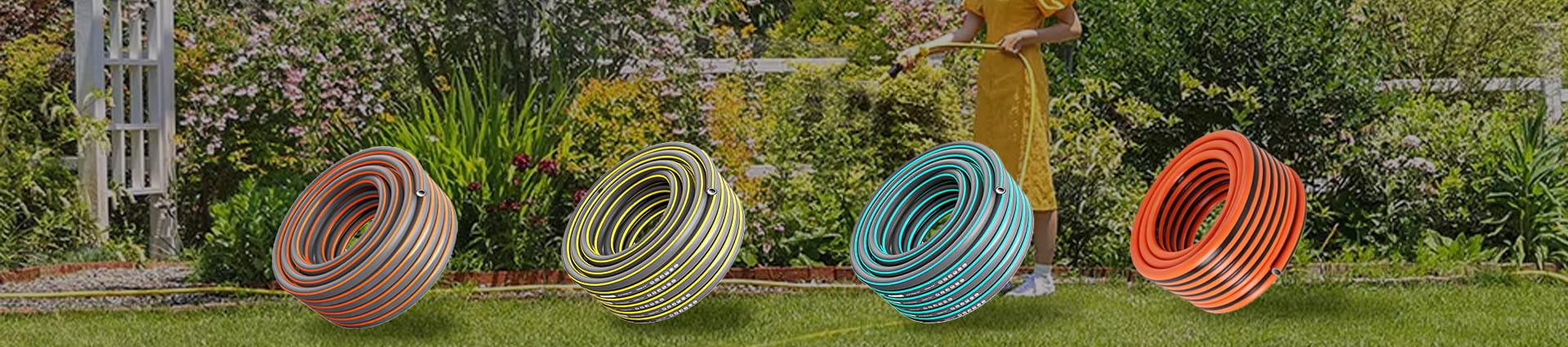
Check chemical compatibility, working pressure, outdoor exposure, coil length, and handling weight. Hose color and printing can also help product identification.
Review pressure, temperature, oil mist exposure, coupling type, and whip-control requirements. A recoil design may improve storage for some workstations, but it must still match the equipment.
Provide the supplier with complete information about the medium and operating cycle. Continuous pressure, pulsating pressure, suction, vacuum, and static transfer impose different demands.
High-pressure hose bulk supply programs should begin with a written specification. Buyers should include:
Intended application and transferred medium
Normal and maximum pressure
Operating temperature
Inner diameter and length
Required reinforcement
Fitting type and thread standard
Surface marking and branding
Packaging method
Sample and inspection requirements
Approved samples provide a physical reference for dimensions, color, flexibility, printing, and connection details. Any later change should be documented rather than introduced informally during production.
We specialize in PVC hoses and manufacture high-pressure, garden, gas, air, shower, and washing-machine hose categories. Buyers can explore our PVC hose manufacturing capabilities when evaluating whether one supplier can support both standard and demanding hose programs.
For high pressure hose bulk supply, we can develop OEM or ODM specifications covering diameter, pressure requirement, reinforcement, color, printing, fittings, and retail or industrial packaging. Extrusion, braiding, winding, testing, and packing are coordinated in-house, helping maintain specification consistency across repeat orders.
This manufacturing connection is relevant because high-pressure hose performance depends on control at every stage—from material formulation and extrusion to reinforcement and finished-assembly inspection.
Use a standard hose only when its verified pressure, temperature, and material specifications match the application. Choose a high-pressure hose when the equipment or operating conditions require stronger reinforcement and a higher rated assembly.
Never make the decision based solely on price, weight, color, or perceived thickness. The correct comparison is between two documented specifications under the same real operating conditions.
Provide the target application, technical requirements, fittings, quantity, branding, and destination market. Discuss your bulk hose project with our manufacturing team before confirming the final specification.