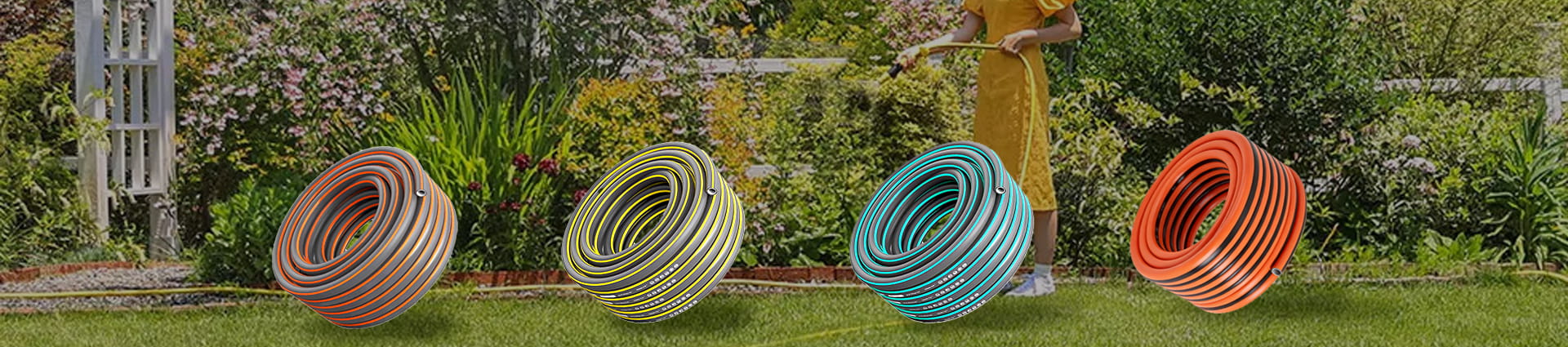
Garden Hose size can refer to three different things:
The internal diameter of the hose
The total length of the hose
The thread or connector size at each end
These measurements should not be treated as the same specification. A 5/8-inch hose can still use a 3/4-inch threaded coupling, and two hoses with the same diameter can perform differently because of their length, reinforcement, wall construction, and fittings.
The most common residential and light-commercial hose diameters are:
A 1/2-inch hose is lighter and easier to carry, coil, and store.
It is commonly selected for:
Balcony watering
Small gardens
Potted plants
Light patio cleaning
Short hose reels
Users who prefer lower weight
It carries less water than a larger hose under similar conditions, but that may be acceptable for normal hand watering.
A 5/8-inch hose is a common general-purpose size.
It provides a useful balance between:
Water delivery
Weight
Flexibility
Storage space
Compatibility with garden Accessories
It is often used for lawns, vehicle washing, sprinklers, household cleaning, and everyday garden work.
A 3/4-inch hose has a larger internal passage and can carry more water under comparable pressure and length.
It may be preferred for:
Large gardens
Commercial landscaping
Longer watering runs
High-demand sprinklers
Filling tanks or pools
Construction-site cleaning
Agricultural support work
The trade-off is additional weight, larger fittings, and more storage space.
Our garden hose range includes 1/2-inch, 5/8-inch, and 3/4-inch PVC or reinforced PVC configurations.
Garden hoses are normally selected by nominal internal diameter.
The outside diameter varies according to:
Wall thickness
Number of reinforcement layers
Braid structure
Outer-cover material
Pressure rating
Abrasion protection
Anti-kink construction
A reinforced 1/2-inch hose may have a larger outside diameter than a light-duty product with the same internal water passage.
When ordering repair fittings, measure carefully and confirm whether the supplier is referring to internal or external diameter.
Longer is not always better.
As water travels through a hose, friction reduces the available flow and pressure at the outlet. A longer hose normally creates more loss than a shorter hose with the same internal diameter.
Choose a hose that reaches the working area with a small amount of extra length. Excessive unused hose can:
Reduce performance
Increase weight
Create more kinks
Occupy more reel capacity
Increase purchase and shipping cost
Make storage more difficult
For a large site, using a larger diameter may help compensate for a longer run, but the complete system still depends on faucet pressure, fittings, nozzle restriction, and elevation.
A short 1/2-inch hose is normally easy to manage and sufficient for containers, small cleaning tasks, and light watering.
A 5/8-inch hose provides a practical middle option for lawns, plants, car washing, and general cleaning.
A 3/4-inch hose may be more suitable when greater water delivery is required over a longer distance.
Check the reel’s rated hose diameter and length. A reel designed for 1/2-inch hose may not hold the same length of 3/4-inch hose.
Follow the pressure washer manufacturer’s inlet requirements. The supply hose must provide enough water volume and use compatible fittings.
A larger hose does not create pressure by itself.
The pressure originates from the water supply or pump. A larger internal diameter reduces flow restriction, which can help preserve more pressure at the outlet during high-flow use.
Actual performance depends on:
Supply pressure
Hose length
Internal diameter
Number of bends
Connector bore
Nozzle opening
Elevation
Hose condition
A narrow quick connector or partially closed valve can restrict a large hose.
PVC garden hose can be designed with different combinations of:
Flexible inner tube
Textile reinforcement
Braided layer
UV-resistant cover
Anti-kink structure
Cold-weather formulation
Customized color
Printed branding
The correct diameter is only one part of the product specification.
We manufacture garden hoses and hose systems in 1/2-inch, 5/8-inch, and 3/4-inch sizes. Customized hose lengths can extend up to 100 metres for selected projects, while fittings, brass connectors, tap adapters, spray nozzles, colors, logos, and packaging can be configured for distributors and brand owners.
For an OEM inquiry, buyers should provide:
Internal diameter
Required length
Working pressure
Burst-pressure target
Hose construction
Target climate
Connector standard
Retail or industrial application
Packaging method
Order quantity
A 1/2-inch hose is compact and light, a 5/8-inch hose suits many household applications, and a 3/4-inch hose supports higher-demand watering and cleaning.
Select the smallest hose that can comfortably deliver the required water over the actual distance. This avoids unnecessary weight without restricting the job.
Previous: What Thread Is A Garden Hose?