A municipal water main distributes water beneath a road or public area. A service line connects that main to a building. Inside the property, another main supply pipe carries water from the meter or entry point to the plumbing system.
These sections may use different materials because their diameters, pressures, installation methods, and regulatory requirements are not the same.
Ductile iron is widely used for buried municipal systems because it has high mechanical strength and can tolerate traffic loads, pressure changes, and demanding installation conditions.
Its suitability depends on corrosion protection, joint design, soil conditions, lining, and installation quality.
PVC pressure pipe is commonly used for water distribution because it is corrosion-resistant, relatively lightweight, and available in large diameters.
The selected class must match the operating pressure, surge pressure, burial conditions, and local water authority requirements.
High-density polyethylene is used for water mains and service lines, especially where flexibility, trenchless installation, or fused leak-resistant joints are useful.
HDPE can accommodate ground movement better than many rigid materials, but correct fusion, handling, sizing, and installation are essential.
Steel is used in some large-diameter, high-pressure, bridge-crossing, exposed, and special engineered water systems.
It normally requires suitable internal lining, external coating, welding control, and corrosion protection.
Concrete pressure pipe may be selected for certain large-diameter transmission systems. Its use is generally associated with engineered municipal or regional water projects rather than normal residential service connections.
The service line may be made from copper, PE or HDPE, PEX, or another locally approved pressure-pipe system.
| Service-Line Material | Main Characteristic | Common Consideration |
|---|---|---|
| Copper | Rigid and familiar to many installers | Soil corrosion, cost, joint quality |
| PE or HDPE | Flexible with long continuous runs | Approved fittings or fusion and pressure class |
| PEX | Flexible and available for approved water-service use | Local code, burial protection, fitting system |
| PVC pressure pipe | Corrosion-resistant and economical | Local approval, jointing, impact and burial conditions |
| Stainless steel | Strong and corrosion-resistant | Cost and specialist fittings |
Lead pipe should not be used for new potable-water service lines. Old lead and some galvanized service lines may require identification and replacement under local water-quality programs.
After the water line enters the property, the building main may use:
Copper
PEX
CPVC
Stainless steel
Multilayer composite pipe
Other code-approved potable-water pipe
The correct material depends on pressure, water chemistry, temperature, fire requirements, building type, installation access, and local regulations.
A pipe approved for indoor plumbing is not automatically suitable for direct burial, and an underground service pipe may not be appropriate for hot-water distribution.
The pipe must handle normal pressure as well as short pressure surges caused by pumps, closing valves, and changing demand.
The pressure class should not be selected from the average reading alone.
Metal pipes may require external protection in corrosive soils. Plastic pipe avoids metal corrosion but must be protected against incorrect bedding, excessive point loads, and unsuitable backfill.
A main line that is too small creates friction loss and weak flow when several outlets operate together.
Sizing should consider:
Peak demand
Pipe length
Available supply pressure
Elevation change
Number of buildings or fixtures served
Acceptable water velocity
Future expansion
A reliable pipe can still fail when its joints are poorly made.
Fusion, solvent cement, mechanical fittings, compression joints, soldering, brazing, or welding must be completed with the correct tools and procedures for the selected system.
Every pipe, liner, fitting, seal, and connector in a drinking-water system should meet the applicable requirements of the project market.
Material names alone do not prove compliance.
Ordinary garden, shower, washing-machine, and general high-pressure hoses should not replace a permanent buried municipal main or building service line.
Flexible hoses are more commonly used for:
Equipment connections
Pump vibration isolation
Temporary water transfer
Garden and cleaning applications
Appliance supply
Sanitary connections
Maintenance and project support
Any hose installed in a pressurized water system must be specifically rated and approved for that application.
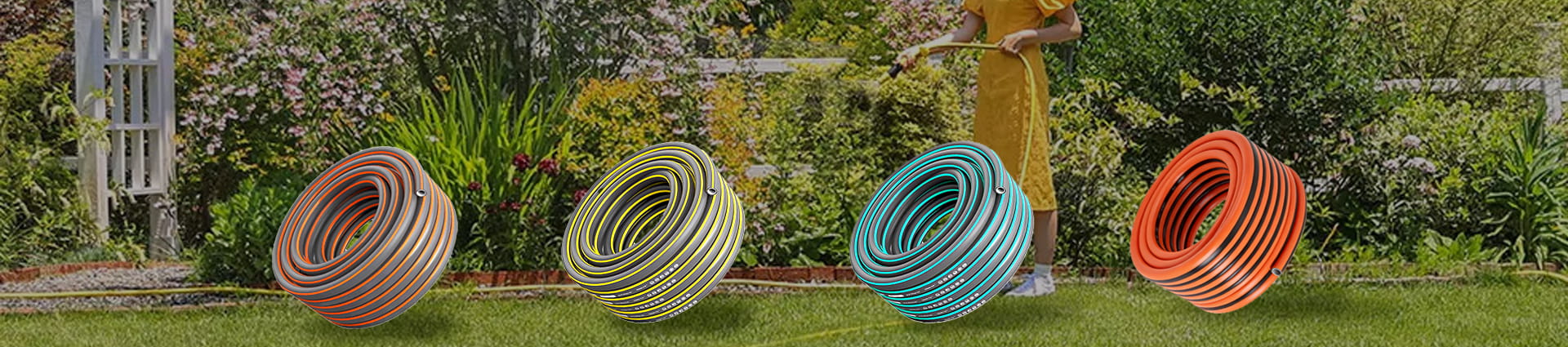
Our product range includes Garden Hoses, high-pressure hoses, Shower Hoses, washing-machine hoses, Accessories, and customized flexible fluid-transfer products.
These products can support the sections of a project where flexibility, movement, convenient connection, or portable water delivery is required. They do not replace code-approved municipal pressure pipe unless a product has been specifically engineered, tested, and certified for that use.
OEM and ODM options include:
Internal diameter
Overall length
Reinforcement structure
Working and burst pressure
Material formulation
Fittings and threads
Color and printed marking
Packaging and private label
Pressure, burst, aging, and material testing helps control production consistency, while project suitability must be confirmed against the actual installation standard.
Before sourcing pipe, hose, or connection components, prepare:
Municipal main, service line, or indoor use
Potable or non-potable water
Required diameter
Working and surge pressure
Burial depth
Soil conditions
Temperature
Connection standard
Required certification
Project quantity
Expected service environment
This information prevents a flexible transfer hose, appliance connector, or indoor pipe from being used in the wrong part of the system.
Municipal main water lines commonly use ductile iron, PVC pressure pipe, HDPE, steel, or concrete pressure pipe. Service lines to buildings often use copper, PE, HDPE, PEX, or approved PVC systems.
The correct choice depends on pressure, diameter, soil, water quality, jointing method, and local approval. Flexible hoses are valuable at pumps, appliances, and equipment connections, but they should not be treated as replacements for permanent water mains without specific engineering and certification.