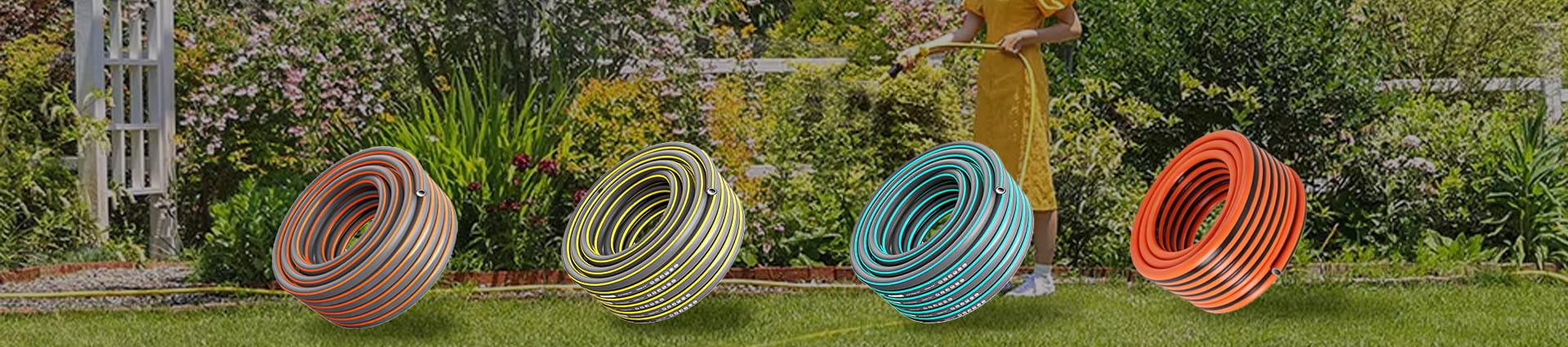
A good garden hose delivers water consistently, bends without collapsing, resists ordinary outdoor wear, and remains easy to handle over its intended working life.
The key safety difference between a gas hose and a water hose is the consequence and mechanism of leakage. Water loss is normally visible, while escaping gas may spread without leaving liquid evidence and can create fire, explosion, or asphyxiation hazards.
Selecting the right PVC hose begins with the medium. Water, compressed air, gas, and spray solutions interact differently with the inner tube, reinforcement, fittings, and operating environment.
PVC hose is a flexible tube made primarily from polyvinyl chloride compounds. Depending on its formulation and construction, it can transfer water, air, gas, cleaning liquids, spray solutions, or other compatible media.
Garden hoses and gas hoses may both be flexible PVC hoses, but they cannot be used interchangeably because they are designed for different media, pressure conditions, permeability limits, temperatures, fittings, and safety requirements.
An LPG hose is a flexible tube designed to transfer liquefied petroleum gas between compatible parts of a gas system, such as a cylinder, regulator and appliance.
Rubber and PVC garden hoses differ in weight, flexibility, cost, formulation and suitability for repeated use. Rubber can suit demanding handling, while PVC provides a lightweight and highly customizable option for retail and household markets.
A PVC garden hose is usually better for light weight, everyday watering and price-sensitive garden use. A rubber garden hose is often preferred for demanding handling, frequent dragging and wider temperature exposure.
To connect a garden hose to PVC pipe, install a threaded PVC adapter that matches the pipe diameter, then add a hose-thread adapter or quick connector.
The car pressure washer vs hose decision should be based on cleaning volume, soil level, labor time, water availability, maintenance cost, and surface risk.